
Wedding Shoes for Groom: What to Wear with Sherwani & Shalwar Kameez
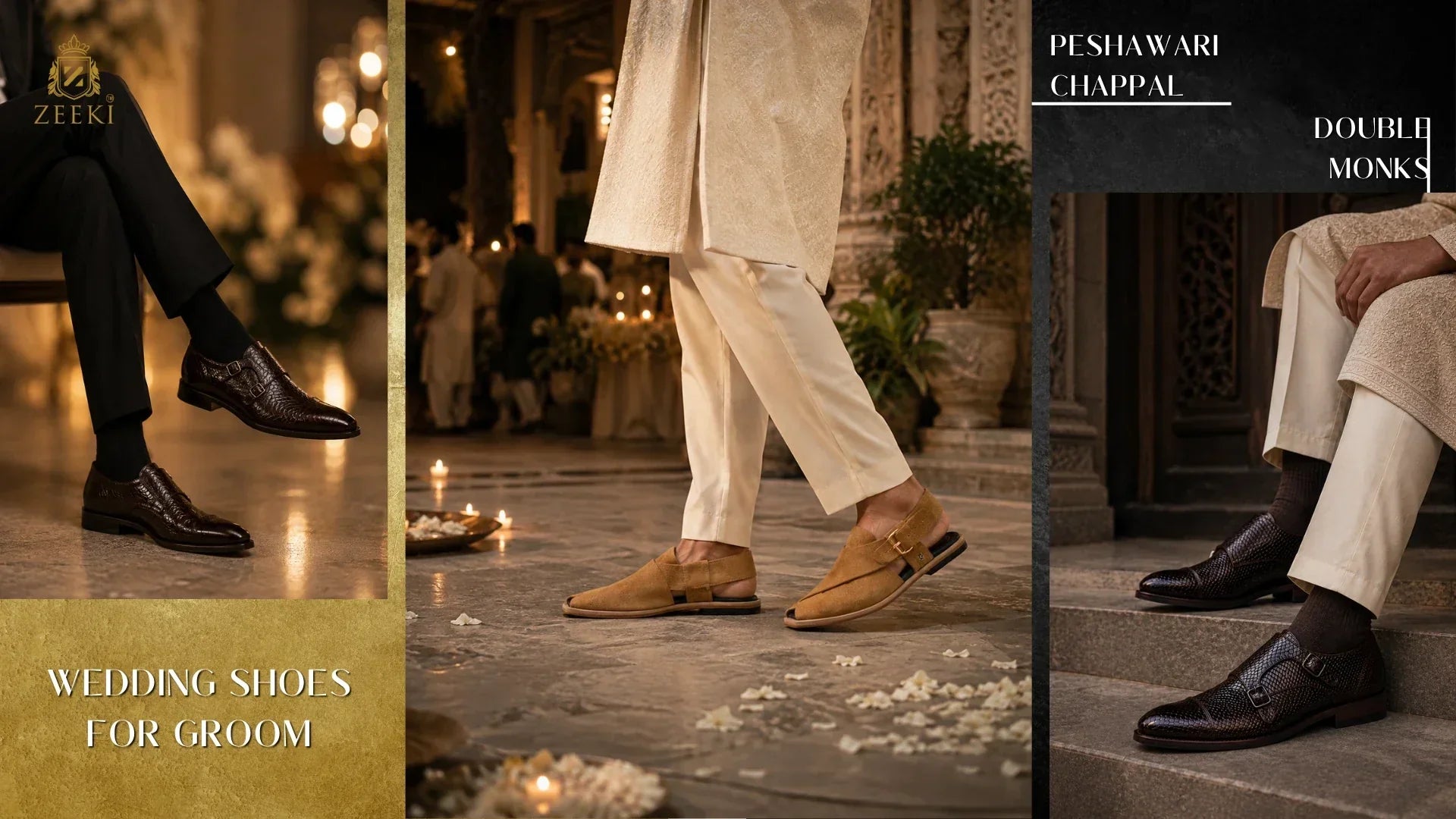
Grooms spend weeks choosing the sherwani, the turban, the waistcoat - and then pick shoes in the last five minutes, almost as an afterthought. That's a mistake. In every wedding photo where the groom is standing, walking, or seated with his outfit visible, the shoes are in frame. Wedding shoes for groom deserve the same thought as everything else on the outfit list - not because they need to be flashy, but because the wrong pair can throw off an otherwise perfect look, and the right pair can hold up comfortably through a 6-8 hour event.
This guide breaks down exactly what to wear with a sherwani, what to wear with shalwar kameez, and how to choose between events - without defaulting to the heavily embroidered khussa everyone already expects.
Why Footwear Matters as Much as Your Sherwani
A groom's outfit is judged as a whole silhouette, not piece by piece. Guests and photographers notice when the shoes look mismatched, unpolished, or clearly rented. Beyond appearance, comfort matters just as much - a groom is on his feet for most of the Baraat, standing for photos, walking the stage, and greeting guests for hours at a stretch. Stiff, poorly-fitted, or unbroken-in shoes are one of the most common regrets grooms mention after their wedding.
The right wedding shoes for groom need to do three things: match the formality of the outfit, stay comfortable for a full day, and photograph well up close.
Wedding Shoes for Sherwani: The Best Options
A sherwani is the most formal piece in a groom's wardrobe, and the footwear should match that register. Here are the styles that actually work - and where they fit best.
Double Monk Strap Shoes - The Modern Groom's First Choice
For grooms who want a polished, contemporary look rather than heavily embellished traditional footwear, double monk strap shoes are the strongest option available. The two-buckle design adds visual weight and formality without a single lace to deal with - genuinely useful during a long day of sitting, standing, and photos. Black double monks pair naturally with darker sherwanis and evening Baraat events, while brown or tan double monks suit lighter, daytime sherwani colours.
Unlike embroidered khussa, a well-made leather double monk strap holds its shape after the wedding and becomes a shoe the groom can actually keep wearing - to work, to future formal events - rather than something that sits in a box after one use.
Horsebit & Tassel Loafers - For Mehndi and Daytime Events
Not every wedding function calls for the same level of formality as the Baraat. For mehndi, daytime nikah, or a more relaxed reception, horsebit and tassel loafers strike the right balance - smart enough for a shalwar kameez or a lighter sherwani, comfortable enough to wear without breaking a sweat under stage lights. Horsebit loafers in particular add a subtle metal detail that photographs well without looking overdressed for a daytime event.
Peshawari Chappal - The Cultural Alternative
For grooms who want to honour tradition without going the embroidered khussa route, handcrafted Peshawari chappal is a strong middle ground. It's rooted in Pakistani heritage, works well with a plain or lightly embroidered sherwani for a mehndi or walima, and offers far more day-long comfort than a stiff, pointed traditional shoe.
Wedding Shoes for Shalwar Kameez
Shalwar kameez shows up across nearly every wedding event - nikah, walima, and countless smaller functions - and the shoe choice shifts depending on the occasion.
For Nikah and Daytime Events
Formal lace-ups or single monk straps in black or dark brown work cleanly with a formal shalwar kameez, especially when paired with a waistcoat. Keep the leather polished and avoid anything too casual for this event - nikah photos tend to be close-up and formal.
For Baraat and Evening Formal Events
This is where double monk straps or horsebit loafers earn their place. Darker tones - black, deep brown, burgundy - photograph better under evening lighting and stage backdrops than lighter shades.
Event-by-Event Quick Guide
|
Event |
Outfit |
Recommended Shoe |
|
Mehndi |
Shalwar kameez / light kurta |
Tassel loafers or Peshawari chappal |
|
Nikah |
Formal shalwar kameez, waistcoat |
Single monk straps or lace-ups |
|
Baraat |
Sherwani |
Double monk straps (black or dark brown) |
|
Walima |
Sherwani or formal suit |
Double monk straps or horsebit loafers |
Black vs Brown: Which Color for Which Event
Black is the safer, more formal choice - it works with darker sherwanis, evening events, and photographs cleanly under artificial lighting. Brown and tan bring a warmer, slightly more relaxed feel that suits daytime events and lighter-coloured outfits. Many grooms end up buying both, since the difference in cost is small compared to the outfit itself, and each pair extends its use well beyond the wedding.
Comfort Tips for All-Day Wedding Wear
-
Buy at least 2-3 weeks before the event and wear the shoes around the house for short periods to break them in - wedding day is not the time to test a brand-new pair.
-
Check the size guide carefully. A groom standing for hours in a slightly tight shoe is a guaranteed problem by the second event. Use the size guide before ordering.
-
Prioritise a genuine leather sole with proper cushioning over a stiff, decorative one - comfort holds up better than a shoe that only looks good in the first hour.
-
Keep a spare pair of comfortable slippers for backstage or between-event breaks if the schedule allows.
Buy Now, Pay Later: Shoes on Installment for Wedding Season
Wedding season adds up fast - outfits, venue, gifts, and footwear all competing for the same budget. Zeeki lets you split any order, including groom's wedding shoes, into 3 easy installments at checkout, so a genuine handcrafted leather pair doesn't have to compete with everything else on the wedding expense list.
Why Choose Zeeki for Groom's Wedding Shoes
-
Handcrafted, genuine leather construction - built to outlast a single wedding event
-
Double monk straps, horsebit loafers, and Peshawari chappal covering every major wedding function
-
3 easy installments available at checkout
-
1 year free shoe servicing - polish and repair after the big day, at no extra cost, detailed on the shoe servicing page
-
Free nationwide delivery, with timelines listed on the delivery information page
-
Full formal range beyond wedding-specific styles available in the formal shoes collection
Frequently Asked Questions
What shoes should a groom wear with a sherwani?
Double monk strap shoes are the strongest modern option - formal, comfortable, and reusable after the wedding. Horsebit loafers work well for lighter or daytime sherwani events.
Can I wear loafers with shalwar kameez at a wedding?
Yes, especially tassel or horsebit loafers for mehndi and daytime events. For nikah and more formal shalwar kameez looks, single monk straps or lace-ups are a better fit.
Should wedding shoes be black or brown?
Black suits evening and formal events like the Baraat; brown and tan work better for daytime, lighter-toned outfits. Many grooms buy one of each.
How early should I buy my wedding shoes?
At least 2-3 weeks before the event, so there's time to break the shoes in and avoid discomfort on the day.
Can I buy wedding shoes on installment?
Yes. Zeeki offers 3 easy installments at checkout on all styles, including double monk straps and loafers suited for weddings.
Planning your wedding look? Explore double monk strap shoes for your Baraat and Walima, or browse the full formal shoes collection at Zeeki - with 3 easy installments available at checkout.